The control layer for distributed energy.
Melastone develops, owns, and operates battery storage, EV charging, and solar behind the meter — and runs them on the Melastone Controller, which makes dispatch decisions on local hardware so the system keeps earning when the network does not.
Develop
Site identification, utility interconnection, permitting and construction for behind-the-meter storage, DC fast charging and solar.
Own and operate
We hold the asset and carry the operating risk, so the host is not asked to become an energy company to benefit from one.
Optimize
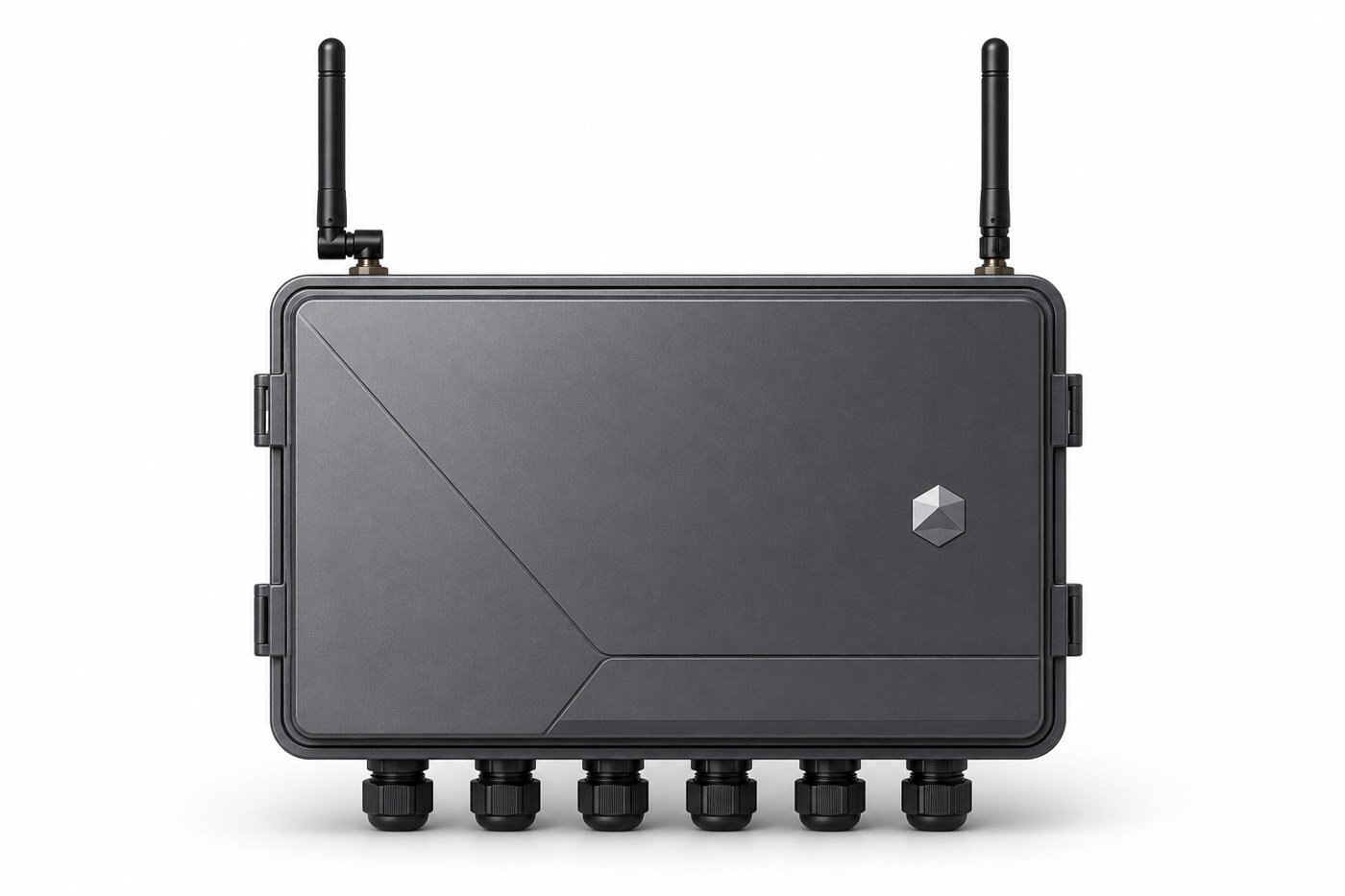
The Melastone Controller runs dispatch on site and takes the resulting flexibility to market on the host’s behalf.
Clouds are for weather.
Dispatch decisions are made locally, on the hardware at the site.
- On-device optimization that continues through network loss.
- Open protocols, no vendor lock-in.
- Signed software and a dedicated security element.
No payment. A short qualification form; a limited cohort is accepted.
We measure before we act.
Every Melastone site carries our own revenue grade metering at the service entrance. We see the whole service, second by second, including the load nobody enrolled in any program.
Utilities know where the solar is and how big it is. What they lack is what it is producing right now, separately from that customer’s load. A smart meter reports a fifteen minute total hours after the fact, and it nets solar against load, so it cannot tell eight kilowatts of load minus six of solar from two kilowatts of load.
That measurement is what makes a limit something we can hold and prove, rather than something we schedule and hope for.
The asset stays the owner’s, and stays worth something.
No lock-in for the host
The property is not tied to our hardware, or to us. Open protocols mean the owner can operate the asset with anyone.
Any asset, any vintage
Batteries, chargers, solar, HVAC, refrigeration — including equipment already on site. Retrofit rather than rip-and-replace, which makes the market the existing building stock rather than new construction.
Portable across markets and manufacturers
Speaking IEEE 2030.5 and CSIP, OpenADR, OCPP, Modbus, BACnet and SunSpec natively means a new device type or a new market does not require a new integration project.
We take your flexibility to market on your behalf
We hold the aggregator relationship and run a competitive process for it, so a site is not locked to whichever aggregator arrived first. Today the aggregator picks the host; the host rarely knows what its flexibility is worth.
For a capital partner: an asset that speaks open protocols is worth more at exit than one locked to a proprietary stack, because the buyer can operate it with anyone.
Four ways this shows up on a site.
Buildings, retail, refrigerated and grocery load
Demand charges, time-of-use exposure and resilience, addressed with equipment that mostly already exists on site.
Capacity at the edge, without the queue
Storage and controls that defer service upgrades and turn an existing service into dispatchable capacity.
Rowhome and multifamily
A hosting program for residential blocks and multifamily buildings, where the household’s own use is served first.
Developers, project equity, infrastructure funds
What we bring to an asset, and what it is worth at exit.
What is the flexibility at your site worth?
Indicative, based on published tariffs. Not a quote. A site screen against twelve months of interval data replaces every number above.
Recent from LinkedIn.
- Darnell Shaffer — Founding Principal and Chief Executive Officer
- 1014 W 36th St, Baltimore, MD 21211